Somewhere In The Hills Above Dak To

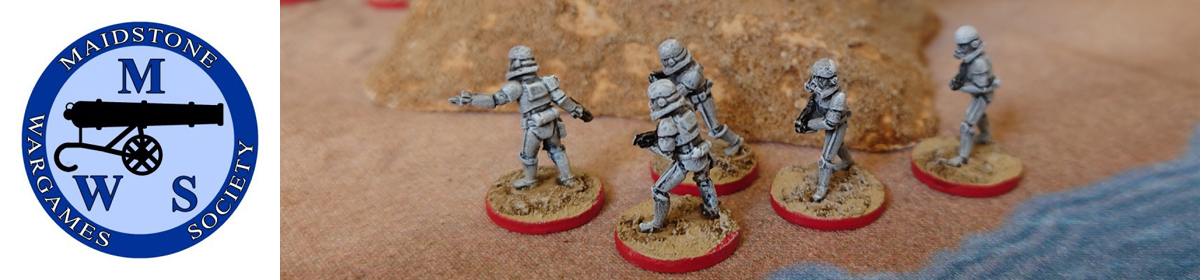
At a recent meeting Stephen ran a 15mm Vietnam game using the Charlie Don’t Surf rules. The scenario was based on the Battle for Hill 875.

Stephen umpired the game and ran the Communist forces. The US forces (A Company, 2nd Battalion, 173rd Airborne) were under the command of Captain Pete, who also ran the Weapons Platoon, with the three Rifle Platoons under the command of Lieutenants Tony F, Andy and Jeremey respectively.

We’ll start with Stephen’s summary of the game:

A Company of the 2nd Battalion, 173rd Airborne, scored an important military victory against the North Vietnamese Army today.
Led by Cpt Pete the company advanced up Hill 875, located the enemy and engaged them.
It was 3rd Platoon under the command of Lt Jeremey who first reached the top of 875.  Meanwhile, a grenadier of Lt Andy 2nd Platoon earned recognition for posting a M79 round through a bunker slit. Lt Tony’ 1st Platoon got bogged down in a vicious firefight and took several MIA.
Company mortars, and a Huey gunship that shredded some NVA recoilless rifles, helped the 173rd to victory.
News on stateside TV reported the battle and civil demonstrations ensued at the loss of American life. It may have been a military victory for the US but the NVA scored a political victory.

Here follows the US Platoon commander’s accounts of the battle.

1st Platoon

First Platoon (Tony) advances early in the game.

This is as far as I got, a vicious firefight with an NVA platoon (and some less than favourable activation draws) saw me pretty much stuck in place for the rest of the game.

The NVA platoon in question, about to receive some 60mm mortar vengeance courtesy of Pete.

The 1st Platoon under fire and pinned. 1st squad suffered badly (7 KIA out of 10), although remarkably 2nd and 3rd squads emerged from the action unscathed.

2nd Platoon

2nd Platoon (Andy) A Company were deployed at the base of Hill 875 with the Weapons Platoon and Company HQ to our left, and 3rd Platoon to our right.
The platoon began its advance with 1st and 2nd squad leading, with 3rd Squad and the Platoon CO in reserve.
1st squad soon spotted insurgent troops further up the hill, the first of the Company to do so, and promptly engaged them. 2nd squad and part of 3rd squad joined in, the remainder of 3rd squad being out of line of sight of the enemy. The fire was effective, causing part of the enemy unit to suffer casualties and become pinned. 2LT Andy reported the sighting to CPT Pete, with a request for mortar support.
3rd squad deployed from reserve to the right of 2nd squad in order to bring its full firepower to bear.
The firefight with the enemy continued, with 3rd Platoon joining in, both 2nd and 3rd Platoons suffered some KIAs, but appeared to inflict more than they suffered.
Under the relentless fire of 2nd & 3rd Platoons the insurgents suffered further casualties and were seen running from their positions back over the crest of Hill 875 and presumably they continued down the reverse slope.
Slightly later a few ranging rounds began to land near 2nd Platoon’s position, expecting an NVA mortar barrage 2LT Andy ordered all squads to advance up the hill as fast as they could. 1st & 3rd squads succeeded, but 2nd squad got bogged down and didn’t move very far.
1st squad’s success in movement proved to be their undoing. They soon came under heavy automatic fire, believed to be either a DShK 1938 or KPV heavy machine gun, in a previously unseen bunker.
1st squad took a couple of casualties, but immediately hunkered down and returned fire, the squad’s M79 gunner achieving an excellent shot which put a 40mm HE round into the bunker, silencing the HMG.
2nd and 3rd squads advanced past the battered 1st squad, joining elements of 3rd Platoon in sweeping across the hill, engaging the remnants of the NVA defenders in the flank and driving them from the hill, at the cost of some more US KIA.
Eventually 2LT Andy’s prediction of a VC mortar barrage came true, but by the time it arrived on it’s original target all US forces had moved further up the hill and none were in the beaten zone.
As 1st squad looked after their dead they discovered a food and material cache buried on the hill side.
The mission proved to be something of a Pyrrhic victory for 2nd Platoon, we engaged and defeated the enemy, destroying a bunker and locating a cache, but at a cost of 5 KIA, 4 of them in 1st squad.
3rd Platoon
3rd Platoon (Jeremey) deployed on the far right of Hill 875. The mission was to assault the hill and so I decided to get moving and threw caution to the wind and advanced quickly up the hill.
Unfortunately after a few moves this left my three squads quite scattered. On top of that the first contact with the NVA turned out to be a real unit who immediately scored a casualty. My return fire was more effective and with support from Andy’s 2nd platoon the NVA were soon routed.
Despite the resistance I decided to continue my advance up the hill, I reached the top of the hill without further resistance but then the bunker was revealed along with more NVA troops. I took a few more casualties and would have taken more if not for Andy’s 2nd Platoon taking out the bunker on the first try.
Laying down some more fire on the remaining NVA, they routed and we claimed the hill.
Company Command
A company’s Forward Observer (Pete) performed well by adjusting the ranging mortar rounds and the subsequent Firing for Effect on the NVA positions on the hill which contributed to the general degrading of the enemy.
Also, significant contributions to the victory came from :-
      • Lt. Tony’s 1st Platoon made steady progress up the left flank but took heavy casualties due fire from a heavy weapons squad with recoilless rifles. These were suppressed by the fire of the Co HQ’s MG squad lower down the hill.
      • Lt. Andy’s 2nd platoon’s impressive accurate fire which neutralised the fortified position on the summit of the hill  soon after the position was observed. The HMG in that bunker would have caused devastating casualties if not dealt with swiftly.
      • Lt. Jeremey’s 3rd platoon made a rapid advance up the slopes of our right flank, although sustaining several casualties, routed the enemy troops before them.
Although Air Support was requested, a Huey gunship arrived after a delay due to the Priority 2 rating of our Area of Operations, but completely destroyed the NVA Heavy Weapons squad enabling all platoons to advance and secure the enemy position on the summit of the hill, seizing enemy weapons and rice caches on the way.
 I, Capt. Pete commanding officer of A Company,2nd Battalion,173rd Airborne, recommend citations for all the commanding officers of A Company platoons.
The view from the other side of the hill
The NVA side of things, as recounted by Stephen. Hill 875 was occupied by a reinforced NVA company – three rifle platoons with AK47s, a pair of recoilless rifle teams, plus the regimental HQ (historically, the rest of the regiment was situated in the hills adjacent and being engaged by the ARVN). Regimental HQ had a mortar spotter (the mortars were actually sited on a hill to the west), wireless team, and HMG in a bunker.
My general plan was to close with the enemy as soon as contact was made to mitigate against the inevitable artillery and airstrikes the US would call in, a tactic referred to as “belt-grabbing”.
The bunker being taken out promptly by US 2nd Platoon took the smile off my face. That HMG would have caused havoc and blunted the US advance and I was going to walk the mortars up to leave the US forces
sandwiched between the HMG and the mortars. But it never came to that.
It was a very historical outcome – the US captured the hill but suffered heavy casualties doing so, and there was considerable public outcry because of it.
And the final word also goes to Stephen:
Thanks to Andy, Tony, Pete, and Jeremey for making it an enjoyable game as I learn the rules. But a special thanks to Pete for his help and knowledge.
Just need to come up with a better name than the toe-curling ‘Big Men’ next…

Open Day 2025 – Games preview

As we get closer to our open day let’s have a look at some of the games being put on.

Mark J is putting on a large Vietnam game, complete with tanks, helicopters and a whole host of miniatures. Mark has been putting on a number of Vietnam games at the society, this game will be a good example of that. If it’s a period you’ve been thinking of getting then the open day will be a good chance to see a game in action.

Next up Marcus has repurposed his award winning 3D Labyrinth game into a Frostgrave / Fantasy Adventure game. If you fancy a treasure hunt this will be a good game, Marcus’ set up is a huge selection of 3D dungeon tiles. There will be adventurers and monsters galore.

Next up and we have a Lord of the Rings games being put on by Tony F and Phil, who have an extensive range of miniatures. This time round we are promised the battle of Azanulbizar. So it will be a clash between Dwarves and Orcs/Goblins, with no doubt the odd troll or two. If big fantasy battles are your thing, they often appear at the society as either Lord of the Rings or Dragon Rampant. Or any other fantasy rules we feel like giving a try.

And the last game we are show casing is Stephen’s Medieval Barons War game. Stephen has an impressive collection of scratchbuilt terrain for the period so expect an almost model village feel to his game with plenty of armoured  knights running amok.

We have two other games members are still putting together and will post details nearer the time.

Details of how to find us on the day are on out About us page. The open day runs from 11am to 4pm and is a good day to introduce yourself to the society, re-ignite your passion for miniature wargaming or to find out what it’s all about and if it’s the hobby for you.

Open Day of the Maidstone Wargames Society 2025

Our Open Day will be on the 28th June this year. We’re open to the public from 11am – 4pm on the day.

This is a great day to come and see the society in action and throw some dice in one of the various games we will have on the day and chat to the membership about the hobby and the club.

This year we have an eclectic selection of games on offer, which might just be the incentive you need to either get back into the hobby or to find a new home for your own armies and games.

Name Scale Period
Vietnam 28mm Vietnam
Technicals 15mm Modern/Alternative History
Battle of Azanulbizar 28mm Lord of the Rings
Second Barons War 28mm Medieval
Catacombs 28mm Labyrinth/Frostgrave
Spearhead 6mm World War 2

Pictures and more details of the games will be appearing on our blog as we approach the day.

Details of where the club meets and location of the Open Day can be found here:
https://www.brigademodels.co.uk/mws/directions.html

Eisenhower – Rules First Look

Colin, John Le and Paul L had a try out game of the new Eisenhower rules from Sam Mustafa. The rules were released earlier this year and are ww2 strategic / operational in scope.

Players control up to 6 divisional formations across a table representing a ground scale of 24 by 16 miles.
Our game was a home brew eastern front Barbarossa type scenario pitching 2 Panzer divisions and a motorized infantry division against a Soviet defence of 2 infantry divisions with a reserve tank corps.

The armies were made up from 2mm Irregular ww2 models with bases of 4x4cm representing battalion strength units.
The table is gridded in 6×6 inch squares and this controls placement and movement of the units.

This works well for this scale of game where the players represent corps commanders. At this scale its not mm placement of units which count but key decisions such as which areas of the front are you attempting to break through in, which units are you structuring your offensive with and are your reserves in the correct position based on the timescales of the offensive.

The rules feature a number of innovative mechanisms including an objectives based victory point mechanism where the objectives move once they are secured so ensuring a dynamic game of movement for the two sides, each of which takes the role of strategic offensive or defensive.
The time period represented in the game is between 4 to 6 days with each day consisting of separate rounds which allow formations to move and combat across the table. At the end of each day is a night phase where supply is checked with potential attrition of units. Exhausted units can also be recovered to a worn status.

In our game we had the Soviets dug in with prepared positions across the table. The panzer divisions lead the attack with mixed success in achieving objectives early on and forcing a breakthrough. We ended up concluding that in our scenario the Soviet reserve tank corps was too powerful when placed on the table at the outset. A more balanced game would probably be achieved by holding it as reinforcements off table which is catered for within the rules.
Future scenarios we will explore include France 1940 and a Normandy amphibious landing.

See you at Salute!

A slight change to our normal Wednesday progress post this week. Members are busy preparing to take our newest show game to the big wargames show Salute on the 12th April.

Bradley (l) faces off against Atari-1.

This year we are putting on a rendition of the classic arcade game Battlezone. If you’re going to be at the show do come along and try your luck against three other opponents! You won’t need a stash of 10p pieces just some good dice rolls.

You can hear more about the game courtesy of OnTableTop’s coverage of our game at the Cavalier show in February.

Atari-1 has Brigade in its sights.

This is our entry in the Salute line up: Maidstone Wargames Society – Battlezone – Futuristic Tank Warfare in 1980 – STAND: GK11

Hope to see you there.

The Norman Conquest, part 1. A Lion Rampant Campaign

Stephen reports on the beginning of a new Lion Rampant Campaign. Andy’s apologies for taking so long to get this onto the blog.

After the debacle of our Crusades campaign I demanded satisfaction from Andy and we agreed to another campaign based around the Norman Conquest.

My Normans rarely see the light of day so this was a chance for me to get them out and gain a bit of glory. Andy took the English.

In the same vein as the Crusades campaign we upped the points values a bit – two 24 point forces, two 30 point, and the final game would be a 48 point bloodbath. Each army gets an extra free point that can only be spent on Leader skills (though more points can be taken from the army total to buy more expensive Leader skills). As before, army lists have to be drawn up ahead of the campaign and assigned to each battle before they are rolled for.

So to kick off we rolled to see who would be Red (Andy) and who would be Blue (me).

And then we rolled for the first encounter of the campaign – we rolled The Village and then rolled again to see which specific scenario – The Taxman Cometh!

So it begins.

For this first game I had a 24 point, fully-mounted, force. I purchased the Strongbow Leader skill. My force consisted of 2 Elite Cavalry (the knights), 2 Heavy Cavalry, and 1 Heavy Cavalry with crossbows.

Andy’s Anglo-Danish force had 30 points, comprising 2 x Elite Foot (1 containing his leader), 2 x Heavy Infantry, 1 x Light Infantry and 3 x Skirmishers. Andy’s leader purchased the Commanding Skill.

Club member Mark placed six tax counters face down on the terrain – these all had a (hidden) value and each side would gain Glory equal to the total value of counters they could get off the table. In addition to this players gain Glory for making Boasts. My Boasts were ‘I shall strike the first blow’, ‘They shall tremble before me’, and ‘I shall burn their homes’. Andy went with ‘They shall tremble before me’ and ‘I shall destroy more than I lose’.

One of the counters had been put in a church and, since I had a mounted only force, we had to make a decision on mounted troops being able to enter a building. The rules say nothing on this. So we rolled randomly and decided that mounted troops could not enter buildings. Although this went against me it made absolute sense and was the right decision. However, this left me with a dilemma – it meant that I would be unable to secure one of the tokens. This shaped my choice of Boasts. I decided that since I would be unable to get it I would try to deny it to Andy by burning down the church! I think you’ll find that such actions are all part of the job description and duties of being a Norman tyrant. (Andy: Sacrilege!)

The first couple of turns of the game were a general advance on both sides. We both did well on Activation rolls and as I recall we both managed to activate all units for the first two turns.

Norman knights out for a ride

Andy had put his skirmishers on his flanks, where two of the tax counters were hidden in the woods, and he managed to secure both. He also made a general advance in the centre with his light infantry, heavy infantry, and dane-axe wielding elite huscarls.

Anglo Danes take the hill

I steered one of my units of heavy cavalry to the woods on my right flank to get the tax counter there, and my mounted crossbows to snatch the tax counter hidden in the woods in the centre.

Shall we shoot or shall we burn something

Those had been the easy ones. The struggle was going to be for the two central tokens – one in the church and the other in some ruins.

View from the Anglo Danish side

Surprisingly, Andy’s unit on his right took their token and fled the table (you only count tokens you get off table). I thought they might stick around for a bit longer to hold the flank. Then he advanced a unit of skirmishers into the ruins to claim a third token.

View across the battlefield

That was annoying, but I saw it coming. I knew it would be difficult to budge them – we classified the ruins as rough going with cover. This made it all the more essential that he didn’t get the token in the church. With that in mind I activated my archers to loose their bolts at the English light infantry who were approaching the church doors. I scored a couple of casualties and this forced him back. With my mind on the Boasts I’d made, I then stuck the spurs into the Leader’s unit and charged the English heavy infantry.

Norman Lord leads the charge

We caused casualties on each other but we both passed our Courage checks and bounced off each other.

On your marks, get set, go!

I then took my chance with the church. A unit of heavy cavalry had moved up and now I made a roll to see if I could burn it. With only 6 men in the unit this meant I needed a 9+. I rolled and scored…11!

Up went the church. This meant it now counted as impassable terrain making it impossible for anyone to get the last tax token. That’ll teach those English rebels, I laughed haughtily.

Normans set fire to the church

Meanwhile, out on my right flank, I could see Andy was trying to find a way of harassing me with his unit of skirmishers. Problem was that in the woods they were safe but out of range. To get in range they had to leave the woods and this would put them at risk of a cavalry charge.

Then something unexpected happened.

On Andy’s activation he charged his heavy infantry into my Leader’s unit. I rolled to counter-charge but failed!

Anglo Dane Elite Infantry charge the Norman Leader

Oh well, I thought – those knights are well armoured and might take a casualty but not the end of the world. And, yes, they did take a casualty. But I rolled a double 1 which meant it was the leader that coped it!

Down he went.

The Normans were now leaderless.

However, one thing was in my favour. The two tax counters I had were high value ones, and I’d also managed to fulfil all my Boasts. So, despite the loss of my Leader, I figured I was still in a strong position.

Problem now, though, was that my mounted crossbows, who had a token, were in a difficult position with both the English heavy infantry and elite infantry getting within charge distance. If I lost them, and their token, then the fortunes of war would be reversed, and I could see in Andy’s eyes that he knew that too.

So the race was now on – get off the table with what I had.

Being mounted had an advantage because I was faster than him. Andy started pulling back his skirmishers with the tokens to secure them, whilst trying to put the pressure on me.

It got a bit hairy when I failed an activation roll to move the crossbows, but Andy was just out of charge range and the following turn they were off and that was the end of the game.

I had secured 5 points of tax tokens and gained another 5 Glory for my Boasts plus an extra 0.5 Glory for facing a larger enemy. This gave me 10.5 Glory.

Andy also scored 5 points of tax tokens, but failed to achieve either of his boasts, so lost a point for each, giving a total of 3 Glory

The first game went to the Normans with a convincing 10.5 to 3 win.

The winner gets to choose the next game and I chose The Road. We rolled for the specific scenario and came up with Meet The Neighbours.

In this game players start in opposite corners and gain Glory for units they get off the opposite corner (plus Boasts).

In this game I had 30 points and my (new) Leader had also taken Strongbow. My force consisted of 2 Elite cavalry, 1 Heavy cavalry, 1 Heavy infantry, 1 foot crossbows with pavises, and 2 skirmishers. My Boasts were ‘Their arrows shall be lost like tears in the rain’, and ‘I shall avenge them’ (I chose his Leader’s unit – after I had lost my Leader I couldn’t let him get away with all the goading that would be coming and had to even things up!).

Andy had a smaller force this time, only 24 points, a single unit of Elite Infantry containing the Leader, 2 units of Heavy Infantry and one of Light Infantry, the force being completed by 3 units of Skirmishers. Andy’s leader purchased the Commanding Skill again.

Boldly he chose ‘Half the Enemy shall fall to my Swords’ and ‘I shall destroy more than I lose’. At least he’d start with an extra 0.5 Glory for facing a larger enemy.

Going into the second game I was cautious. Andy is a very good player and could easily turn fortunes around. So I decided that I would avoid combat where possible (the exception being to nip off the English Leader). My plan was to advance as quickly as I could with the infantry and use the cavalry to protect flanks and threaten any English units if they tried to attack.

That was the plan.

So the game started. The problem we both had is that we couldn’t get all our units in the deployment area, meaning those units off table could only come on with a successful Move activation. Andy went first and made a general, broad, advance. He managed to activate all his units and even bring on the excess unit.

Off to war they go

Things didn’t go quite so smoothly for myself. I started with my Leader’s unit off-table. The first unit I tried to activate failed and without a Leader to prompt a second attempt that was it! The English advanced again.

Back to me. Well, a bit better – I managed to move one unit, which created a gap for me to bring on the Leader. Which I failed. He had another try. Failed again! That breakfast croissant or pain au chocolat was obviously keeping him busy.

Andy advanced again. He swung two units of skirmishers south, toward an area of woodland which meant that if I wanted to advance that way I’d have to endure some bow fire.

By this time Andy was halfway across the table. I’d moved some units but still had others in the deployment zone. It was obvious my plan of getting across the table was going to fail. Andy would be off sooner than me and would win the game with a good score. I had to change my tactics. The only way I could win is if I prevented Andy getting off the table and the only way I could do that was by eliminating his entire army! I went on the attack!

Norman firing line

It was more by luck than design. By the time our two forces came face to face I hadn’t advanced too far but the position I found myself in was an advantageous one. To one side of the road was a hill and to the other was an area of rocky ground. I decided I would put the crossbows on the hill, the skirmishers in the rocky ground, and use the heavy cavalry and spearmen to plug the gap with the knights behind to act as a mobile reserve where they could either exploit a gap in the enemy or charge to the defence if the enemy broke through. It was a strong position which I can’t take any credit for.

The key to this would prove to be the rocky ground. I think Andy recognised that and I could see him manoeuvring units that way to launch an attack. Lines were drawn. Now the battle started.

Anglo Danish thanes and huscarls make a steady advance

My skirmishers in the rocks opened fire (thanks to the Leader’s Strongbow skill) on Andy’s light infantry, causing a couple of casualties. Meanwhile he started moving the heavy infantry around the side of the rocks and his Leader’s unit came forward. The English skirmishers opened up with some desultory bowfire – thankfully the rocky ground provided good cover.

Norman archers in the stones

Seeking an opportunity I thought I’d try my luck. With his Leader within charge range of the Norman heavy cavalry, and an eye on my Boasts, I thought I’d give it a go. In went the cavalry. I caused one casualty against the English (failed the Lucky Hit to bag the Leader) but Andy had given me a fair wallop – I took three casualties. Not only were the Norman cavalry Battered but they were at half strength as well. Oh well, I thought, I’ll use them as an expendable unit and see what more damage they can do to the English Leader (a perfectly acceptable attitude for an invading Norman tyrant).

On Andy’s turn he did something that surprised me – he charged his light infantry into the rocks to take on my skirmishers! Well, I suppose I don’t blame him. If he left them there then it would cause a lot of problems. He had to do something. In response to the charge I decided to Evade. That took me out of the rocks but it caused casualties on the charging English which meant they had to retreat. Meanwhile, to the south, the English skirmishers in the woods and the Norman crossbows on the hills just stared at each other. I moved a unit of Norman knights behind the hill but in position so they could charge if the skirmishers dared come out the woods.

Norman corssbows supported by Norman knights

The fight around the rocks continued. The English heavy infantry moved forward. This could be a potential problem. I had two choices. Ideally, I wanted to shoot with both my skirmishers to loosen them up, and then charge with the Norman Leader’s knights. The skirmishers would shoot on a 7+ and the knights charge on a 5+. If I failed with either of the skirmishers then activation would switch to the English and I’d miss out, so maybe I could just charge with the knights? The Norman Leader had the Strongbow skill, but I’d used that to order the crossbows to shoot at the English Leader’s unit (another casualty on them, but still not the Leader).

Anglo Danes march pass the POND OF DEATH

I decided to put my faith in the dice. I rolled for the first skirmisher unit. Success! They fired. Then I rolled for the second unit of skirmishers. Another success! OK, so the English heavy infantry had taken a few casualties. Now was the time. In went the knights, led by the Norman Leader – let’s just hope it wouldn’t be a repeat of the previous game.

In they go

No, it wouldn’t be. The English infantry took more casualties and failed their Courage test. They fell back, Battered, and below half strength. They’d taken enough casualties that it would be hard to recover.

Feeling cock-a-hoop with my charges I sent the Norman heavy cavalry in against the English Leader again. Another casualty on the English meant they were now at half strength, but in return they eliminated the last of the heavy cavalry. I didn’t care. They’d done their job. It was now starting to look good for the Normans and I could see another victory coming.

Andy realised he had to go for it. The skirmishers to the south moved out of the woods and shot at the crossbows. They caused a single casualty but I fluffed the Courage roll and they had to retreat behind the hill. My skirmishers moved back into the rocks and continued firing at the English light infantry causing more casualties and Andy obligingly rolled a double 1 for their Courage. Off they went. It was now looking very good.

We were moving into the end game. My thoughts turned to Glory points. If I entirely eliminated the English army that would be game end but since I hadn’t got any units off I would only receive Glory for the Boasts I’d made and none for the game objective. It was going to be hard to do anything about that.

Andy points an accusing finger at the Norman spears

Andy still had a unit of heavy infantry in the centre. They lined up against the Norman heavy infantry and went in. It was pretty much a draw, with a casualty on either side. In the meantime my skirmishers kept opening fire on the English Leader, but bad dice rolls meant I just couldn’t cause any casualties. I then sent in a unit of knights against the English skirmishers and completely eliminated them. In response Andy moved the other unit back into the woods where they would be safe. The Norman heavy infantry charged the English heavy infantry and, again, a couple of casualties on either side but the Normans failed their Courage test (and would ultimately fail to rally and rout off table).

Then came the final act. The Norman Leader ordered the crossbows to open up at the English heavy infantry. At close range the bolts thudded in and off they went. The skirmishers drew their bows, took aim at the English Leader and…down he went at last! All the English had left was a unit of skirmishers hiding in the woods.

Ironically, I didn’t want to destroy them. What I wanted to do first was get some of my troops off-table. Andy knew this, so it was in his interests for the skirmishers to either be eliminated or get off themselves to bring the game to an end before I gained too many Glory points. What I also wanted to do was weaken the skirmishers to reduce their effectiveness but without actually killing them. A burst of fire from the crossbows did the trick, reducing them to half strength. Both sides made a rush for the table edge. The English, though, were closer and were soon off, bringing the game to an end. I hadn’t got any of the Normans off.

Final Glory scores were just 3 for the Normans (for successful Boasts). The English had got a half strength unit off, earning 1 Glory, and had the extra 0.5 Glory for having the smaller force. But they had failed both Boasts meaning -2 Glory giving a final total of -0.5 Glory.

A second Norman win! Glory tallies at this point are 13.5 for the Normans, and 2.5 for the English. We still have three games to go. Andy is a good and capable player, so whilst I’m happy with this lead I am not complacent.

History of the Society

2021 was the 50th anniversary of the society and we decided we should have a properly documented history of Maidstone Wargames Society. It’s taken a bit longer than we anticipated but we have finally managed to reconstruct the main highlights of the society from 1971 to the present day.

We’ve given our history its own page and we will add to it each year details of our show games, open days and other events of significance.

History of Maidstone Wargames Society


A Day at the Society

This week we thought we would show you what a day at the Maidstone Wargames Society looks like.  As a reminder the society meets on the second and fourth Saturday of each month at the Linton Village Hall between 10am to 5pm, which gives members enough time to pay a couple of quick games or to play something larger.

At our 12th of October meeting there were six games covering quite a varied array of periods and scales.

We start with the game from our featured image above. Andy and Stephen have started a short campaign of the Norman conquest using the Lion Rampant ruleset.

Both have extensive 28mm dark age armies which means as well as being able to play larger battles they also have enough miniatures to represent both forces. This allows them to accommodate new players to the period or scale.

That’s always been an advantage to being in a club or society. I had no dark age miniatures when I first joined, but other members provided miniatures so I could try out new rules and games to see if I wanted to get involved.

We did this for the Saga rules and I now have a sizeable Viking and Anglo Saxon force of my own.

For that big battle feeling Paul put on a Napoleonic battle using 3mm miniatures.

Paul was trying out some home grown rules and the game was a good example of one player providing all of the forces for this epic battle.

All Paul needed were some willing volunteers and so a number of other members joined in to test the rules.

For this meeting Tony F and I had a practice game of Xenos Rampant. There’s normally a good mix of historical and fantasy or sci-fi at the society. I’d not played Xenos Rampant and asked Tony who had played a couple of games to go through the rules with me.

The games were played using 15mm miniatures, but my Xeno Rampant army was still on the painting table and so I used some of my other sci-fi miniatures that would work at any scale.

Namely some 6mm scale mechs and some 28mm powered armour that also double up as suitable armoured mechs for 15mm.

Tony F provided the terrain for the games and we managed to really test the rules and get two games in on the day.

Mark J and Felix had been painting like mad to get ready for the Vietnam game they were putting on. Often at the society someone will put on a larger game that can accommodate a number of players. I believe this game had six members playing on the day.

Again a great advantage of being a member. When real life gets in the way it’s great to be able to just turn up an play. No need to prepare anything, you don’t even need to bring dice or a tape measure, although there is always a shortage of the latter!

The Vietnam game was a nice big one using several of the tables available, giving the US forces lots of jungle to get through.

I didn’t ask who won, but each time I looked over the table there were a number of concerned faces.

John La was also testing out some rules he is writing covering the notorious boarder reiver period along the Anglo-Scottish boarder.

A number of members have been regularly helping John with the rules, I’ve not played it myself, but I do believe the games are now flowing very well.

Also nice to have games that are more scenario based and not just a straight forward battle to challenge players in other ways to achieve victory.

Speaking of scenarios the sixth game at the meeting was provided by Eric who put on a Call of Cthulhu role playing session.  A number of members jumped at the chance of a bit of RPG action. In recent times the society has seen a number of members run role playing games.

If you are interested in joining the society or just want to come and have a look at what we do, either to learn more about the hobby or re-kindle your enthusiasm for miniature wargaming check out the details on our about the Maidstone Wargames Society page., or come down to one of our meetings, you can see what we currently have planned on our diary page.

D DAY FOR WW2 RULES

Stephen presents a comparison of three different WW2 rules.

I’m only an occasional WW2 gamer. Probably not even that often. I often tussle with what rules to use because I’m not sure what kind of game I want. Generally, I’m more interested in the infantry experience, but WW2 is all about the tanks as well, isn’t it?

So what I’ve decided to do is have a game with the three sets of WW2 rules I have – Crossfire by Arty Conliffe, Battlegroup by Warwick Kincaid, and Fireball Forward by Mark Fastoso and Jonathan Miller. To test the games I have decided to play exactly the same scenario with the same forces to see how it goes.

Scenario

To give a true compare and contrast between the rules all games will use the same layout and the same forces (more or less), a German company with machine gun support and a Russian company with mortar support.

The games will be small ones, on a 3’x2’ board. To the south east is a farm with a road running north/south and a junction heading west. Wheat fields lie either side of the western road. To the north east and south west are areas of light woodland. In the north west there is an area of high ground.

The Battlefield

It is August 1944 somewhere in east Europe. Stalin has launched Operation Bagration. The Germans are on a strategic withdrawal in the face of a Russian advance. The German armour is making its way south, down the road, so it can turn west back to Germany. The Russians are coming from the south east. Both sides need to capture the farm and the road junction – so the Germans can get their tanks to safety, and so the Russians can stop them! A German infantry platoon has been sent to capture the objective, just as a Russian scout platoon arrives on the scene…

Game #1: Battlegroup

As written, Battlegroup uses individually based figures. But mine are based in 3s. This is easily dealt with by adding wound markers. Each player’s battlegroup is composed of ‘units’ (e.g. a squad of infantry). Each unit will add to the Battlegroup’s Battle Rating. During the game a player will have to draw a token from a bag after certain events (e.g. a unit is destroyed, or you try to unpin units, plus other events). This token could have a numerical value (from 1 to 5) or be a special event. When the numbered tokens add up to the battlegroup’s Battle Rating it is game over.

Germans take cover by a wheat field.

The Russians went first. At the start of each turn the player rolls one or more D6s (depending on the size of the game) and adds one for each officer. This total is the number of units you can activate this turn. This means you won’t always be able to activate everything every turn. I like that – it creates tension and decision making.

The Russians advanced north along the road and west behind the wheat fields. In response the Germans advanced – one squad with MG34 went into the wheat fields and the other two squads advanced toward the two areas of woodland. To activate a unit you must choose from specific orders. These include moving and firing, firing and moving, double move, double fire, plus many others (e.g. calling in mortars). One such order is to put your unit on reactive movement or reactive fire, which occurs in your opponent’s turn.

Russians advance past the farm.

The Russians moving behind the wheat field held in place and went on reactive fire (wondering what one of the German squads would do). The Russian Maxim gun attempted to open fire on the other German squad in the other piece of woodland. To open fire first you must roll to spot. This seems to be the case even if you have previously shot at a unit (the wording certainly implies this is the case), the rules highlighting how seldom opposing enemies saw each other, especially when trying to keep low and out of sight themselves. Once spotted you then total up all the figures firing – each weapon has a ROF and this is the number of dice rolled. Chance to hit is based on range and ROF. The target then makes a save roll (based on any cover). Remaining hits are then taken as casualties and a morale roll is taken which could be anything from OK, to Pinned, to Rout. Standard stuff.

The Germans were starting to encircle the Russians, holding both areas of woodland and also the wheat fields in the centre. Then, on the Russian turn, the Russian officer called in some mortars. This caused two German casualties and the Germans failed their morale and went pinned. A pinned unit can take no action at all and stays pinned until rallied. To rally a player must draw a token from the bag. For each token 1D6 pinned markers can be removed. I drew a token and pulled out a 3 – a significant number for a game as small as this. The German MG34 decided to return the favour and opened up. The Russians took casualties and also got a Pin result. But on the Russian turn I decided to leave them pinned (you don’t have to rally) for fear of drawing a bad token.

The Russians in the fenced field have taken casualties and one unit is pinned.

The Germans had taken more pinned markers, which I had to try and rally or else they’d sit there doing nothing.

Germans have taken casualties and are Pinned, but they drew a “Beyond the Call of Duty” token.

But this time I drew a special marker: Beyond the Call of Duty. Not only did the pin marker come off, but it came off without any harm to their Battle Rating. The Beyond the Call of Duty marker allowed them to make a roll to see if they could take an extra activation. They failed. But at least they were no longer pinned.

Ultimately, it would be a Russian victory. The Germans found themselves taking shelter in the woods and with Russian mortars falling they soon took enough casualties for game end.

Game #2: Crossfire

A confession: I’ve played Crossfire quite a few times. Models in Crossfire are based in multiples, with 3 on a base for a squad. It’s pitched at company level infantry actions, which is precisely what I’m interested in.

Russias occupy the farm, but some are Suppressed.

So Crossfire has some key concepts – no fixed turns (units can keep activating, multiple times), no ranges (if you can see it, you can shoot at it), no move distances (I’ll say a bit more about this). The core mechanics are very simple though – when shooting you’ll roll a few D6 and need a 5 or 6. One hit is a Pin, two hits a Suppression, 3 hits a Kill. Not rocket science.

Germans brace for the Russian advance.

The game started with the Germans on the high ground. The Russians came on by activating. You can either move them by individual squads or you can do a group move. So I brought the first Russian platoon on, behind the barn. I put the mortar observer in the barn where he’d have a good view. And so on. In Crossfire units move in straight lines. Players have to indicate to their opponent the route they are taking and if an enemy squad can draw LOS it can make a reactive fire. If the reactive fire fails to Suppress then the active player can carry on. If it does Suppress then initiative switches. Units move from terrain piece to terrain piece (or into the open). All the time they have initiative they can activate again, even with the same unit.

Russians advance screened by smoke.

The Russians moved up to the western road with two of their platoons whilst the Germans came off the hills to take cover behind the wheat fields. The Russian FO then called in smoke to obscure the Russian advance and the Russian squads moved up behind it. The Russian Maxim MG took up position in one of the farm buildings to prevent a German flank attack, it opened fire on the Germans but failed to score a hit.

Over to the Germans.

With little to stop them the Germans made their way along the top of the battlefield and into the woods, where they engaged the Russian Maxim. The MG crew attempted reactive fire but failed to score a hit which means they would be unable to do any more reactive fire until after initiative switches, so they are marked with a No Fire counter. The Germans opened up.

Russian Maxim gun team are Pinned, and may Not Fire until initiative changes hands

Things were a bit slower along the western road, with neither side daring to break cover. One of the Russian platoons dug-in and the German machine guns repositioned. Meanwhile the attack on the farm buildings was going well for the Germans – they destroyed the Russian MG and moved up to occupy the buildings. To counter this a Russian platoon moved into one of the wheat fields and a prolonged firefight broke out, but the Russians finally managed to dislodge the Germans from the farm.

The game would end as another Russian victory! This game had been a lot more dynamic and fast-paced – one of the advantages of Crossfire. It had been more tactical as well (compared to the line ‘em up, face each other, and start shooting affair of Battlegroup). This is the real advantage of Crossfire – you start to think like an infantry commander – laying down smoke for cover, trying to organise squads in to firegroups or the eponymous crossfires, when to react, when to rally…lots of decision points. That’s where the complexity lies in the game, in the tactics. Very enjoyable.

Game #3: Fireball Forward

OK, let’s deal with the elephant in the room. The dice. If you know anything about Fireball Forward it’s the whole dice thing. So here’s how it works. To shoot you will be rolling some white D6 and some red D6 (for infantry squads it’s actually one of each). And you will also be rolling a range dice (a D20 for infantry). The red dice hits on a 6. Only a 6, and it’s never modified. The white dice can be modified and will hit on either a 4, 5, or 6. Then we come to the range dice. A weapon has an effective range (e.g. 10”) PLUS what you roll on the range dice – so for infantry squads it could be up to 30” (10” plus you roll a 20 on the D20). You do not pre-measure! So after rolling, if the range is higher than the effective range plus the range dice you have missed regardless of what you roll on the white/red dice and if the target is within the effective range plus range dice then there’s the chance of a hit – check the white/red dice. If the actual range is less than the D20 roll you get a +1 on the white dice.

Russians open up, if the range to their target is <=13″ they’ll score a hit with the 5 on the white die.

That sounds more complicated than it actually is. It only gets messy when you are dealing with weapons with range dice like D20D20D8.

You are either going to get on with this or you aren’t. It’s a marmite thing. Like I just said, it’s not as bad as it sounds like it could be, so long as you restrict yourself to predominantly infantry actions with just a few different armoured vehicles.

Russians about to be outflanked.

Movement is also a bit novel. Infantry can, in theory, have an unlimited move. But what they can’t do is finish their move, nor can any part of their move, take them more than 12” from where they started. The player must trace the movement route so the opposing player can announce if and where he can make an opportunity shot.

These are the two big Fireball Forward things and I wanted to get them out in the air at the beginning.

For initiative you need a pack of playing cards. You draw a card and keep drawing until a different colour comes up – you put that card back on top of the deck. You check how many cards you have and then you mark your units with a number and activate them in that order – lowest first. So let’s say I draw 3 red cards and the fourth is black. The black card is put back. I have three red cards which means I can now activate three Allied units. Once all units, of both sides, have activated a new turn begins. What’s really good about this is that both players are involved at all times and there’s always a chance you can salvage a bad situation.

German machineguns about to fire.

I realise I’ve spent more time discussing mechanics than actual game play, but that’s OK – after all, this is about letting you know about these very different sets of rules. I bet those of you who are into rules writing and game design will enjoy reading Fireball Forward.

So let’s deal with the actual game. This one turned into a much harder fought encounter. Both sides used more or less the same tactics as previous games – the Germans moved along the northern edge into the woods and then tried to force their way south, down the road, into the farmyard. Meanwhile, the Russians advanced along the southern edge, behind the wheat fields, hoping to outflank the Germans.

This time the Germans were more successful. They eliminated the Russian platoon occupying the farm and then moved in themselves. The German machine guns halted the Russian advance down the western road and brought up a platoon through the fields to outflank the guns. Meanwhile, the Germans in the farm pressed the attack and came round behind the Russians to launch an attack against the Russian company command and Maxim gun. The Germans finally achieved a win!

Russians move past the farm.

Conclusion

I’m not going to offer scores or say which is best and that kind of thing. Instead I am going to say how they suit me and my gaming – in a club setting with multiple players on a Saturday.

Battlegroup is a very ‘traditional’ game. By that I mean it is an IGOUGO system with nothing particularly ground-breaking mechanics wise. I don’t mean that negatively. If you have several players, none of whom have played Battlegroup before (or even WW2), then they will pick it up soon enough. Which is what you need in a club. It’s also aimed at being a ‘big’ game – with combined arms. Battlegroup, as the name suggests, is about lots of infantry and armoured columns having at each other. The simplicity of the rules does mean it has less subtlety or tactical finesse and I imagine it could get a bit vanilla, but that also suits group play.

By contrast, Crossfire is a game for the gamer. It may be the oldest of the three but it’s also the most innovative. It’s really aimed at infantry-only games. Yes, there are armoured vehicle rules, but they do seem a bit tacked on and the rules writer himself admits they aren’t the best. And they aren’t. Fortunately for me, infantry actions are what I’m most interested in, so I don’t play Crossfire with vehicles. Although it’s a simple game, the novelty of some of the processes will take a bit of getting used to for a newcomer. The game mechanics are very simple, but the tactical choices and options are what make it complex – the mark of a good game! A one-on-one game with someone new would be a good way of introducing the rules and be a real pleasure. Crossfire is my go-to WW2 rules. If you are inclined to the tactics and experience of the infantry commander then you could do a lot worse.

This leaves us with Fireball Forward. Like Crossfire, it has some innovative components, particularly the dice mechanism. Like Battlegroup, it is also about combined arms and integrates vehicles into the rules in a better way than Crossfire. But I have to underline the dice mechanism. It reads worse than it plays. In practice, you roll the hit dice and range dice at the same time, and I found myself looking at the hit dice first to see if there was even a chance of hit. This made it playable and you will pick it up in just a couple of turns of combat. This is OK so long as you aren’t dealing with too many varieties of range dice. Infantry will, generally, be using a D20. Though some vehicles will use a tortured combination such as D20D20D8D8. No. Just no. As such, for my money Fireball Forward works somewhere between Battlegroup and Crossfire – mainly infantry actions with two or three vehicles in support. Which is what I’m looking for.

There’s a place for all these rules. What you go for will depend on what you are looking for. They all provide a different kind of game and they all provide a good game. You won’t go wrong with any of them, but I think I will mostly be sticking with Crossfire (with the odd game of Fireball Forward).

Oh, one last thing. Yes, I have heard of Chain of Command. Yes, it is a very good game. But I don’t own a copy.

Lion Rampant Five Battles, Day 2

Andy completes the write up of the Crusades mini campaign. 

First off, I must apologise to my fellow gamers, it has taken me far too long to complete this report.

Stephen and I continued the Five Battles Campaign from Lion Rampant Version 2. This time we were joined by two other members, joining Stephen with the Ayyubid Egyptians was club treasurer Mark, and joining me with the Frankish Settlers was new member Charlotte.

Photo credits: Charlotte, Stephen and Andy.

To recap the first day, we played three games, with my Pullani (Frankish Settlers) forces winning each battle. I had 3 victories and 23 Glory, Stephen had 3 defeats and -1 Glory. You can read about these games in a previous blog entry here.

The second day would comprise two more battles, the final battle using double size armies

When planning these games, we had prepared five warbands with differing points values for the five battles, and had assigned each warband to a battle before the campaign started. Stephen had used his larger warbands in the battles on the first day of the campaign, so would be at a disadvantage in the first game of day two.

Having won the final battle on day one, I got to choose the first battle on day two; I chose “The Road” and the die roll resulted in “The Convoy” scenario with Charlotte and I as the attacker (see part 1 for the battles that make up the campaign).

In this scenario the attacker has three convoy tokens that must be conveyed from one corner of the table to the opposite corner. For our game these comprised of a cart, a group of pious monks and a group of civilians. Each token had to be assigned to a unit, although more than one token could be assigned to the same unit. Escorting units were restricted to a maximum move of 6”. The convoy tokens have no effect in the game, other than marking the escorting units.

Stephen and Mark’s forces (Ayyubid Egyptian) comprised:

      • 1 x Mounted Mamluks (Heavy Cavalry with Bows) Leader Blessed (Once per game, reroll any one full set of dice by any player) @ 7 points
      • 3 x Mounted Turcomen (Wild Turk Light Cavalry) @ 4 points each
      • 1 x Foot Ghilmen (Light Infantry with Javelins) @ 4 points
      • 1 x Ahdath (Skirmishers) @ 2 points                                        Total 25 points

Andy and Charlotte’s force (Frankish Settlers (Pullani))

      • 1 x Knights (Elite Cavalry, Motivated), Leader Strongbow (Once per turn, unit within 12” automatically passes shoot activation) @ 8 points
      • 2 x Sergeants (Heavy Cavalry) @ 4 points each
      • 1 x Foot Sergeants (Heavy Infantry) @ 4 points
      • 1 x Foot Yeomen (Light Infantry) @ 3 points
      • 1 x Crossbowmen @ 4 points
      • 2 x Skirmishers @ 2 points each                                              Total 31 points

The scenario requires the attacker to deploy the units escorting the convoy tokens first in one corner of the table. The defender then deploys their forces, placing at least 4 points of units in each of the other three corners of the table.

We deployed our Foot Sergeants with the Monks and Civilians, and the Foot Yeomen with the Cart in the south east corner of the table, along with a unit of Skirmishers. We couldn’t fit anything else into the deployment area, so our remaining units would have to enter the table as a Move activation.

Andy’s convoy and escorts deploy (Andy)

Stephen and Mark deployed their main force of the Mamluks and two units of Mounted Turcomen in the North East corner.

Stephen’s main contingent (Andy)

In order to satisfy the requirements to deploy at least 4 points in each of the other two corners they deployed a unit of Mounted Turcomen in the South West corner

Stephen’s flanking force (Andy)

And their Ghilmen and Ahdath in a village in the North West corner (our exit point).

Stephen’s blocking force (Andy)

Prior to the first turn of the game the units escorting the convoy are allowed to attempt one move activation as a “head start”. Our Yeomen succeeded in their attempt and moved forward with the cart, but the Foot Sergeants refused to budge.

Our first turn was more successful, the first unit of Skirmishers and both escorting units succeeded in their moves, and we also managed to bring on both units of Mounted Sergeants, one on each flank. Our Crossbows and our Knights also made it onto the board. We deliberately kept our Leader’s Knights close behind the Crossbows to maximise the use of the leader’s Strongbow ability. The only unit that failed to come on was the second unit of Skirmishers.

Andy’s contingent advances, well, some of it! (Andy)

Stephen and Mark brought their Mamluks and Turcomen forward from the North East corner, to get in a position where they could block our path to the North West corner.

Stephen’s main force advance (Stephen)

In the North West corner, the Ghilmen found a wall to hide behind and the Ahdath occupied a building.

Stephen’s Ahdath occupy a building (Stephen)

I think Stephen wanted to use his only infantry units to block our exit from the table, but it did mean that in the early stages of the battle he would only have four units totalling 19 points to try and slow down our force of 31 points, or 24 points if you exclude the units escorting the convoy.

In our next couple of turns Charlotte and I concentrated on getting our units forwards, and didn’t advance the convoy escorts. We had a unit of Mounted Sergeants on each flank, with both the Crossbows and Skirmishers near to the Leader’s unit. Actually, looking at the photos I think we forgot to deploy the second unit of skirmishers!

Andy’s force spreads out (Andy)Stephen’s main force continued to advance ahead of us, with one unit of Turcomen lagging behind, and the lone unit of Turcomen advancing towards our left flank getting close enough to shoot at our Mounted Sergeants and inflicting a casualty.

On our Northwestern flank one of Stephen’s Turcomen units engaged our Mounted Sergeants, but with the help of our skirmisher’s shooting honours were even with both units being reduced to half strength.

Stephens main force skirmishes with Andy’s right flank, casualties on both sides. (Andy)

Meanwhile Stephen’s Mamluks came within range of our Crossbows, and with our Leader’s Strongbow ability guaranteeing a shooting activation each turn our quarrels took out a couple of figures, the Mamluks eventually came to blows with our left flank Mounted Sergeants, both sides taking casualties and falling to half strength but his Leader didn’t succumb to any lucky blows!

Stephen’s leader’s unit, or what’s left of it, and a unit of Turcomen (Andy)
Remnants of Andy’s Left Flank face off against Stephen’s leader (Charlotte)

Meanwhile our convoy stayed back near the hill guarded by the Crossbows and Knights.

Stephen’s Turcomen closed on our Crossbows, and managed to kill one of them, but the Crossbows stayed firm and their return fire decimated the Turcomen.

Stephen’s Mamluks charged our Mounted Sergeants again, but this time his luck ran out and his leader fell.

One of the units of Turcomen got close enough to the Yeomen to shoot at them and caused a casualty, but they passed their Courage test.

Stephen’s flanking force, Turkomen Light Cavalry (Charlotte)

Our Crossbowmen continued to shoot at anything that came within range, guaranteed by the Leader’s Strongbow ability and both the Mamluks and Turcomen were practically wiped out, only a couple of figures were left, allowing the convoy and escorts to advance off the hill.

The convoy advances, slowly (Charlotte)

The only functioning units Stephen and Mark had left were the Ghilmen and Ahdath in the village blocking the Pulanni’s exit. Although our Mounted Sergeants had been sorely damaged, our Crossbows and Skirmishers had only taken a few casualties and it was apparent that eventually we could position our Crossbows where they could shoot at the Ghilmen and Ahdath every turn from outside the range of their bows and javelins, and even with the benefit of cover they would eventually be whittled down, allowing us to escort the Convoy off the table.

So, at this point Stephen and Mark conceded the game.

Stephen and Mark made three boasts: “They will Cower before me” (3 Glory, failed). “They will Tremble before me” (2Glory, failed) and “My Arrows are Deadlier Than my Spears” (2 Glory, success). The failed Boasts cost 1 Glory each, so that made a total of zero Glory for the Ayyubids.

The Pullani only made two boasts, “They will Tremble before me” (2Glory, failed), and “I will Destroy more than I Lose” (2 Glory, success), making a total of 1 Glory to add to the 2 glory points per Convoy marker escorted off table. That gave the Pullani an additional 7 Glory.

After the fourth battle the Pullani had 4 victories and 30 Glory, the Ayyubid Egyptians had 4 defeats and -1 Glory.

The final battle.

From the outset of the campaign, we had agreed that the final battle would be a major clash using the Bloodbath scenario, and that each side would bring 50 points, split into two contingents, each with a leader. The two contingents did not have to have equal points.

On the Ayyubid Egyptian side the two contingents were:

Emir Mark al-Harris.

      • 1 x Mounted Mamluks (Heavy Cavalry with Bows) Leader @ 6 points
        • Skills: Commanding (+2 points), Insipid (-2 points), Strongbow (+1 points)
      • 2 x Mounted Turcomen (Wild Turk Light Cavalry) @ 4 points each
      • 2 x Foot Ghilmen (Light Infantry with Javelins) @ 4 points
      • 1 x Ahdath (Skirmishers) @ 2 points                             Total 24 points

Emir Stephen a’t-Ucker

      • 1 x Mounted Mamluks (Heavy Cavalry with Bows) Leader @ 8 points
        • Skills: Blessed (+2 points) and Strongbow (+1 points)
      • 2 x Mounted Turcomen (Wild Turk Light Cavalry) @ 4 points each
      • 1 x Hashishin (Warrior Infantry, Assassin) @ 5 points
      • 2 x Ahdath (Skirmishers) @ 2 points each                 Total 25 points

Notice the sudden appearance of the Strongbow skill in both contingents?

The Pullani contingents were:

Count Andrew:

      • 1 x Knights (Elite Cavalry, Motivated), Leader @ 9 points
        • Skills: Commanding (+2 points)
      • 1 x Sergeants (Heavy Cavalry) @ 4 points each
      • 1 x Foot Sergeants (Heavy Infantry) @ 4 points
      • 1 x Archers @ 4 points
      • 1 x Holy Characters @ 2 points
      • 1 x Skirmishers @ 2 points                                 Total 25 points

Holy Characters are a unit type from the Crusader States supplement, they are similar to Skirmishers, but with only a 6” move, no shooting capability and lacking all the Skirmisher’s special rules, they do however allow, once a turn, a partial re-roll of dice for units within 6”. Re-roll 2 dice if 12 were rolled, otherwise re-roll 1 die.

Countess Charlotte:

      • 1 x Knights (Elite Cavalry, Motivated), Leader @ 8 points
        • Skills: Strongbow (+1 point)
      • 1 x Sergeants (Heavy Cavalry) @ 4 points each
      • 1 x Foot Sergeants (Heavy Infantry) @ 4 points
      • 1 x Foot Yeomen (Light Infantry) @ 3 points
      • 1 x Crossbowmen @ 4 points
      • 1 x Skirmishers @ 2 points                               Total 25 points

Summary of Leader skills

    • Strongbow: Once per turn, one unit within 12” of Leader’s model automatically passes a shoot activation)
    • Commanding: Each turn may re-roll one failed Move, Attack or Shoot activation withing 12” of Leader’s model.
    • Insipid: The Leader does not give the usual +1 modifier to Courage tests to unis within 12” of Leader’s model
    • Blessed: Once per game, re-roll any one set of dice, rolled by any player.

Stephen included his Hashishin in his contingent again, this time their dastardly plan failed and the Assassin sent after Count Andrew met a grisly end.

There would be no subtlety about the final battle, no scenario objectives other than defeating the enemy.

On the Christian side Andy deployed his contingent on the right flank. Archers on the left of his front line, then the Foot Sergeants, Skirmishers on the hill and Mounted Sergeants on the right flank.

Andy’s Knights and Holy Characters (the monks) were kept in reserve.

Andy’s contingent, the monks are the Holy Characters (Andy)

Charlotte deployed on the left flank, she kept her Knights and Mounted Sergeants in the centre of her deployment, with the Foot Yeomen on her left and Foot Sergeants on her right. Her Skirmishers and Crossbows were deployed in front of her cavalry, both within 12” of her Leader, to make best use of her Strongbow ability.

Charlotte’s contingent (Andy)

Opposing us Stephen deployed opposite Charlotte, and Mark deployed opposite Andy. We didn’t take many pictures of the Ayyubid deployment, but here’s a close-up of Stephen’s Turcomen and Hashishin Ahdath,

Stephen’s Turcomen and Ahdath in the village (Stephen)

Mark wasted no time advancing his cavalry towards Andy’s troops, lots of mounted archers approaching!

Mark’s cavalry approach Andy’s troops (Charlotte)

The exchange of arrows was fairly one sided, with two of Mark’s attacking units taking casualties with no loss to Andy’s forces.

Andy & Mark’s contingents, latter has taken some casualties. (Andy)

On the other side of the battle, Stephen advanced his Ahdath and a unit of Turcomen towards a village, with his Leader’s Mamluks supporting them, while his Hashishin and other Turcomen unit failed to advance. Charlotte’s crossbows and Yeomen also entered the outskirts of the village, with the Knights and Sergeants following up.

Charlotte’s and Stephen’s contingents (Andy)

Back on the Christian right flank, Andy and Mark’s troops came to blows, Mark’s cavalry charged Andy’s Archers, and after the latter took 4 casualties, they failed a courage test with a very low roll and routed from the field. The same fate befell Andy’s Skirmishers.

Andy then committed his cavalry; the Knights drove off one of Mark’s Turcomen units and then charged Mark’s Leader’s unit. After a couple of rounds of combat Mark’s leader fell dead as his unit was wiped out, meanwhile Andy’s Mounted Sergeants forced back Mark’s other Turcomen unit.

Andy’s Holy Characters took the hill previously occupied by his Skirmishers, a touch of religious frenzy perhaps?

Andy’s contingent, his Archers and Skirmishers have routed, but the Ayyubids have also suffered losses (Andy)

On the other side of the battlefield, Charlotte’s and Stephen’s troops exchanged missiles, both Charlotte’s Crossbowmen and Skirmishers took a beating, being reduced to half strength and failing their courage tests and becoming battered, but one of Stephen’s Turcomen fled the field. One of Stephen’s Ahdath also fell to half strength, but were made of sterner stuff and passed their courage test. Each side also suffered slight losses to their mounted troops.

Charlotte’s crossbow and skirmishers reduced to half strength and battered. One of Stephen’s Ahdath reduced to half strength. (Andy)

Their battle continued, Charlotte’s missile troops rallied, but didn’t seem keen to get back into the fray. Her Yeomen drove off one of Stephen’s Turcomen units. Stephen had advanced his Hashishin, and Charlotte’s Knights charged them and battered them sending them falling back, however this left her Knights exposed to Stehen’s Mamluks and Turcomen.

Charlotte’s Knights advance as the skirmishers flee. (Andy)

Stephen’s Hashishin recovered their composure, but Stephen decided it was time for his leader to show his mettle, and brought his Mamluks forward to face Charlotte’s Knights, supported by a unit of Turcomen.

Stephen’s contingent commit against Charlotte (Stephen)

Charlotte brought her skirmishers back to support her Knights, taking up residence in some bad going and just in range of one of Stephen’s Ahdath, who took more casualties from the skirmishers and fled the field. Charlotte’s skirmishers then turned their attention to the Mamluks.

The final clash (Andy)

Finally, the Mamluks and the Knights came to blows, and eventually wiped each other out. Fortunately, Charlotte’s units all passed their subsequent courage test forced by the loss of the leader.

On the other flank, Andy’s Mounted Sergeants and Mark’s Turcomen came to blows, the Turcomen winning this battle and the Sergeants fled the field.

Andy’s Knights however made short work of the Mark’s other Turcomen unit, routing it.

By now both Mark and Stephen had lost their leaders and just over half their original points value, so were both forced to take Courage tests on their remaining units (although Andy was also close to that point as well). Several of their damaged units failed the courage tests and became battered.

At this point, with several battered units and both of their leaders now dead or having fled the field, Mark and Stephen conceded the final battle.

Totting up the losses the Ayyubids had lost 28 points of troops, 14 each for Mark and Stephen, while the Pullani had lost 18 points, 10 points of Andy’s contingent and 8 points of Charlotte’s.

This gave the Pullani 5 Glory for the victory, now on to the boasts.

Stephen’s boasts were: “They Will Tremble before me” (2 Glory, success). “My Arrows are Deadlier Than My Spears” (2 Glory, success) and “I shall Slay Their Leader” (3 Glory, failed). The successful boasts gave Stephen 4 Glory, but he lost one for the failed boast making a total of 3 Glory

Mark’s Boasts were: “We Shall Avenge Them” (2) (success), “My Arrows are Deadlier Than My Spears” (2) (failed) and “They Will Tremble before me” (2 Glory, failed). The successful boast gave Mark 2 Glory, but he lost one for each of the failed boast making a total of 0 Glory

The final battle gave a total of 3 Glory for the Ayyubids.

Andy made two boasts, “They will Tremble before me” (2Glory, success), and “I will Destroy more than I Lose” (2 Glory, failed), giving Andy a total of 1 Glory

Charlotte made only one boast, “I will make them run” (1 Glory, failed), so she ended up on -1 Glory

The final Glory tally for the Pullani was 5 for the victory, 1 for Andy’s boasts and -1 for Charlotte’s boasts, a net gain of 5 Glory

After the final battle the Pullani had 5 victories and 35 Glory, the Ayyubid Egyptians had 5 defeats and 2 Glory.

A conclusive campaign win for the Pullani!

Stephen wants revenge and has already issued a challenge, the same 5 battles campaign, but this time set during the Norman Conquest of England! We have put these in the diary for later in the year.

Boasts

For those not familiar with Lion Rampant, Boasts are additional objectives you can set for yourself in addition to the scenario objectives. The Boasts we used in these battles, and their success criteria and Glory value are as follows (failing to achieve a boasts costs 1 Glory, irrespective of its positive Glory value).


Boast Criteria Glory
I shall slay your Leader Your Leader must kill the enemy Leader in a Challenge or Attack. Routing the enemy Leader does not count as a success. If the enemy Leader refuses your challenge and survives the game, you succeed but score only 1 Glory 3
I will destroy more units than I lose Your Warband must rout/kill more enemy units than you lose (the actual number of models destroyed and their points value is not relevant). 2
My arrows are deadlier than my spears Your Warband must rout/kill more individual models with Shooting than Attacks (put casualties in two separate piles!) 2
They will tremble before me! At least two enemy units on the table must be Battered at any one time. 2
We Shall Avenge Them Secretly choose one enemy unit, you must rout of kill it during the battle 2
I will make them run One of your units must be the first to fail a Courage test 1